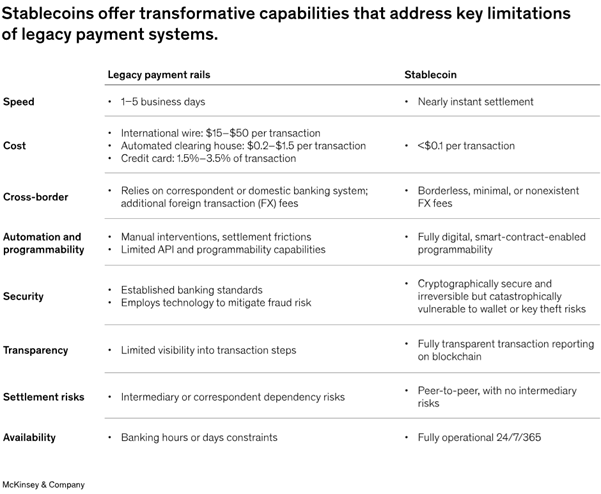
Stablecoins—still overwhelmingly denominated in USD—have quietly doubled in circulation over the past 18 months. Yet they’re only moving $20–30B in real on-chain payments per day, mostly remittances and settlements executed outside traditional FX rails. That’s less than 1% of global daily money transfers.
So harmless, right? Maybe not.
When you stack stablecoin performance against legacy payment and FX systems, the gap is widening fast. If adoption keeps compounding at the pace of the last two years, on-chain stablecoin flows could overtake today’s payment volumes within a decade—and possibly sooner as regulatory clarity (e.g., the Genius Act) and new token issuances kick the door open.
But here’s the uncomfortable twist:
This isn’t just a “better payments” story. It’s a technology that—by design—makes large portions of existing financial market infrastructure unnecessary.
Settlement layers, correspondent banking chains, FX spreads, reconciliation workflows… all start looking like relics.
Stablecoins aren’t knocking on the door of FX and payments. They might already be inside the building.